Yes — the Iran Escalation Is Affecting Pump Prices
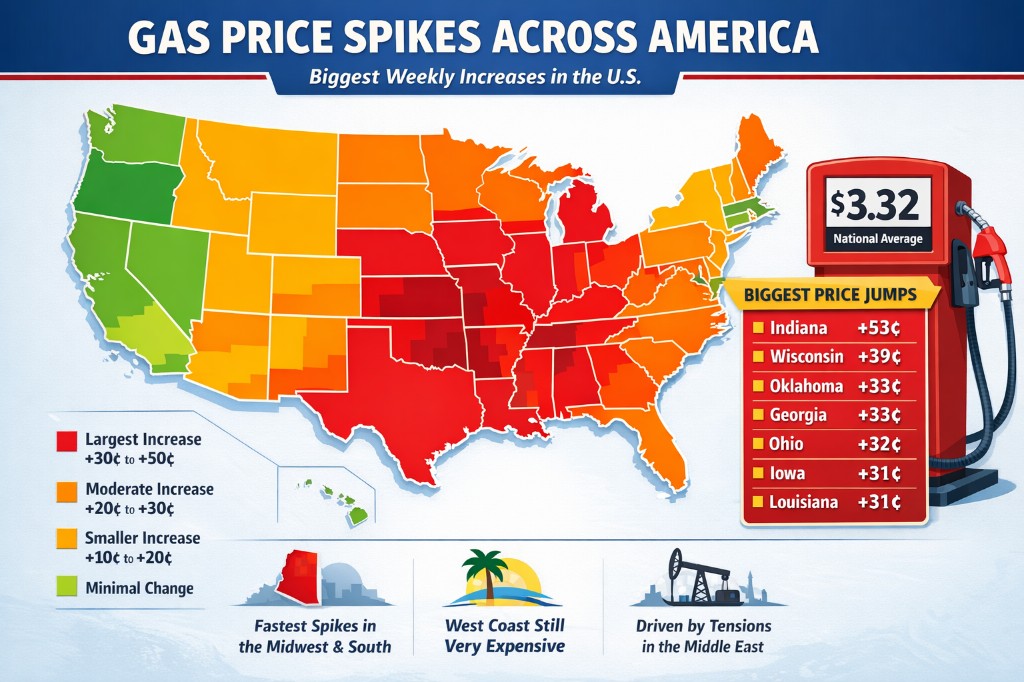
The widening conflict in the Middle East — strikes, tanker attacks, and fears over supply and shipping — is pushing U.S. gasoline prices higher. As of March 6–7, 2026, the U.S. national average for regular gasoline is $3.32 per gallon, up roughly 34¢ in about a week, largely following oil price spikes tied to the Iran conflict and supply concerns. The effect is real and visible at the pump, though still mixed with normal seasonal and market factors. Analysts estimate that roughly every $10 rise in crude adds about 25¢ per gallon at the pump.
What the Latest Numbers Show
Based on the latest AAA and EIA data as of March 6–7, 2026, here’s where regional regular gasoline prices stand:
| Region | Avg Price (Regular) | Notes |
|---|---|---|
| West Coast | ~$4.16/gal | Highest prices in the country |
| Rocky Mountain | ~$2.76/gal | Moderate |
| Midwest | ~$2.68/gal | Among the lowest; rising fastest |
| East Coast – Central Atlantic | ~$2.97/gal | Mid-range |
| East Coast – Lower Atlantic | ~$2.75/gal | Lower East Coast |
| Gulf Coast | ~$2.48/gal | Cheapest region |
Midwest and Southern states are rising fastest. Even though they remain relatively cheap, the Midwest and South have seen the sharpest recent jumps as crude prices spike. The West Coast stays structurally expensive — California and nearby states are approaching $5/gal in some areas due to taxes, environmental fuel blends, and refinery constraints. The Gulf Coast remains the cheapest, with close proximity to U.S. refining hubs keeping prices lower despite global shocks.
In the Midwest, the average runs about $2.68–$2.80/gal — still well below the national average, but week-over-week increases there have been among the fastest as crude moves up.
Why Iran Matters for the Pump
Markets are worried about supply and shipping through the Strait of Hormuz, a major chokepoint for global oil flows. Reuters notes that the conflict has disrupted shipping and raised fears of lost production, helping push Brent into the low $80s this week, with warnings that a serious disruption could send crude materially higher. The EIA reports that crude oil makes up about 47% of the retail price of a gallon of regular gasoline, so when crude jumps, pump prices typically follow.
Bottom Line
There is clear evidence that the Iran escalation is contributing to higher pump prices now. The impact is still early — visible in wholesale and in rising daily and weekly averages — and not every penny of the recent move is “because of Iran.” Retail gas also moves with local taxes, refinery conditions, inventories, and seasonal fuel changes. But based on the latest Reuters and EIA data, the Iran escalation is very likely a meaningful contributor, not just noise. One important perspective: even with this fast spike, the national average is still below 2022, 2023, and 2024 levels — those years averaged $3.95, $3.52, and $3.36/gal respectively. For the full trend and year-by-year comparison, see our Gas Pump Index.
Sources: U.S. Energy Information Administration (EIA) — weekly gasoline prices (March 3, 2026 release, data for March 2) and daily gasoline and wholesale data (AAA, March 4, 2026); Reuters coverage of Middle East conflict, crude oil moves, and impact on supply and shipping; EIA explanation of crude’s share of retail gasoline price.